New Site

Welcome to WordPress. This is your first post. Edit or delete it, then start writing!
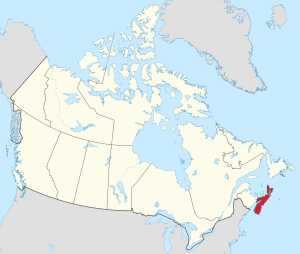
Nova Scotia

Section 14
  • A peace officer may take a person into custody and take the person forthwith to a place for a medical examination by a physician if the peace officer has reasonable and probable grounds to believe that
    • (a) the person apparently has a mental disorder;
    • (b) the person will not consent to undergo medical examination;
    • (c) it is not feasible in the circumstances to make application to a judge for an order for a medical examination pursuant to Section 13; and
    • (d) the person,
      • (i) as a result of the mental disorder, is threatening or attempting to cause serious harm to himself or herself or has recently done so, has recently caused serious harm to himself or herself, is seriously harming or is threatening serious harm towards another person or has recently done so,
      • (ii) as a result of the mental disorder, is likely to suffer serious physical impairment or serious mental deterioration, or both, or
      • (iii) is committing or about to commit a criminal offence.20

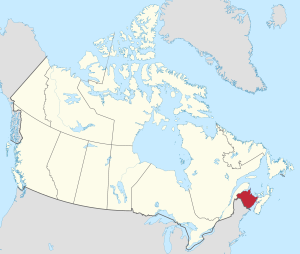
New Brunswick

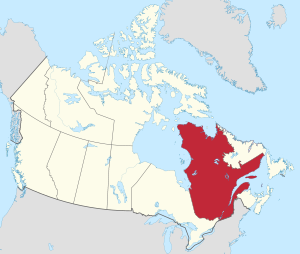
Quebec

Section 8

A peace officer may, without the authorization of the court, take a person against his will to an institution described in section 6

(1) at the request of a member of a crisis intervention unit who considers that the mental state of the person presents a grave and immediate danger to himself or to others;

(2) at the request of the person having parental authority, the tutor to a minor or any of the persons mentioned in article 15 of the Civil Code, where no member of a crisis intervention unit is available in due time to assess the situation. In such a case, the peace officer must have good reason to believe that the mental state of the person concerned presents a grave and immediate danger to himself or to others.

Subject to the provisions of section 23 and to more pressing medical emergencies, the institution to which the person is brought must take charge of the person upon arrival and have the person examined by a physician, who may place the person under preventive confinement in accordance with section 7.

In this section, “crisis intervention unit” means a unit designed to take action in crisis situations pursuant to the mental health service organization plans provided for by the legislation respecting health services and social services.18
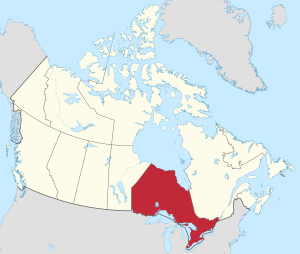
Ontario

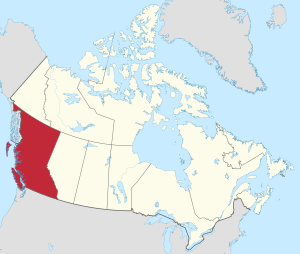
British Columbia

Section 28 – Emergency procedures
  • (1) A police officer or constable may apprehend and immediately take a person to a physician for examination if satisfied from personal observations, or information received, that the person
    • (a) is acting in a manner likely to endanger that person’s own safety or the safety of others, and
    • (b) is apparently a person with a mental disorder.”
  • (2) A person apprehended under subsection (1) must be released if a physician does not complete a medical certificate in accordance with section 22 (3) and (4).
  • (3) Anyone may apply to a judge of the Provincial Court or, if no judge is available, to a justice of the peace respecting a person if there are reasonable grounds to believe that section 22 (3) (a) (ii) and (c) describes the condition of the person.
  • (4) On application under subsection (3), the judge or justice may issue a warrant in the prescribed form if satisfied that
    • (a) the applicant has reasonable grounds to believe that subsection (3) applies to the person respecting whom the application is made, and
    • (b) section 22 cannot be used without unreasonable delay.
  • (5) A warrant issued under subsection (4) is authority for the apprehension of the person to be admitted and for the transportation, admission and detention of that person for treatment in or through a designated facility.
  • (6) On being admitted as described in subsection (5), a patient must be discharged at the end of 48 hours detention unless the director receives 2 medical certificates as described in section 22 (3).
  • (7) On the director receiving 2 medical certificates as described in subsection (6), section 22 (6) and (7) applies to the patient.13

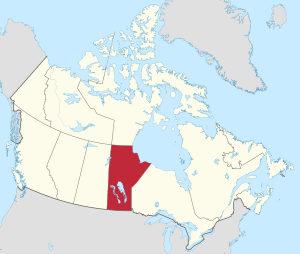
Manitoba

Section 12(1) – Peace officer’s power to take into custody
  • 12(1) A peace officer may take a person into custody and then promptly to a place to be examined involuntarily by a physician if
    • (a) the peace officer believes on reasonable grounds that the person
      • (i) has threatened or attempted to cause bodily harm to himself or herself,
      • (ii) has behaved violently towards another person or caused another person to fear bodily harm from him or her, or
      • (iii) has shown a lack of competence to care for himself or herself;
    • (b) the peace officer is of the opinion that the person is apparently suffering from a mental disorder of a nature that will likely result in serious harm to the person or to another person, or in the person’s substantial mental or physical deterioration; and
    • (c) the urgency of the situation does not allow for an order for an examination under section 11.16

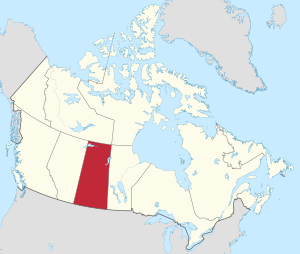
Saskatchewan

Section 20 – Powers of peace officers in certain cases
  • 20(1) A peace officer may apprehend a person without a warrant and convey that person as soon as is reasonably practicable to a place where he or she may be examined by a physician if the peace officer has reasonable grounds to believe that the person is:
    • (a) suffering from a mental disorder; and
    • (b) likely to cause harm to himself or herself or to others or to suffer substantial mental or physical deterioration if he or she is not detained in a mental health centre.15

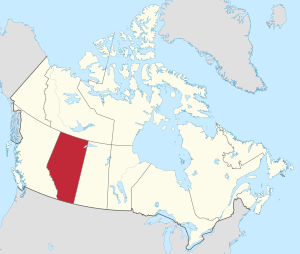
Alberta

Section 12 – Peace officer’s power
  • 12(1) When a peace officer has reasonable and probable grounds to believe that
    • (a) a person is suffering from mental disorder,
    • (b) the person is
      • (i) likely to cause harm to the person or others or to suffer substantial mental or physical deterioration or serious physical impairment, or
      • (ii) subject to a community treatment order and is not complying with the community treatment order,
    • (c) the person should be examined in the interests of the person’s own safety or the safety of others, and
    • (d) the circumstances are such that to proceed under section 10 would be dangerous, the peace officer may apprehend the person and convey the person to a facility for examination.”14

British Columbia

Section 28 – Emergency procedures
  • (1) A police officer or constable may apprehend and immediately take a person to a physician for examination if satisfied from personal observations, or information received, that the person
    • (a) is acting in a manner likely to endanger that person’s own safety or the safety of others, and
    • (b) is apparently a person with a mental disorder.”
  • (2) A person apprehended under subsection (1) must be released if a physician does not complete a medical certificate in accordance with section 22 (3) and (4).
  • (3) Anyone may apply to a judge of the Provincial Court or, if no judge is available, to a justice of the peace respecting a person if there are reasonable grounds to believe that section 22 (3) (a) (ii) and (c) describes the condition of the person.
  • (4) On application under subsection (3), the judge or justice may issue a warrant in the prescribed form if satisfied that
    • (a) the applicant has reasonable grounds to believe that subsection (3) applies to the person respecting whom the application is made, and
    • (b) section 22 cannot be used without unreasonable delay.
  • (5) A warrant issued under subsection (4) is authority for the apprehension of the person to be admitted and for the transportation, admission and detention of that person for treatment in or through a designated facility.
  • (6) On being admitted as described in subsection (5), a patient must be discharged at the end of 48 hours detention unless the director receives 2 medical certificates as described in section 22 (3).
  • (7) On the director receiving 2 medical certificates as described in subsection (6), section 22 (6) and (7) applies to the patient.13